
Are Aliens Out There? …Or Even Here?
Special Guest Column By Captain Ron Janix
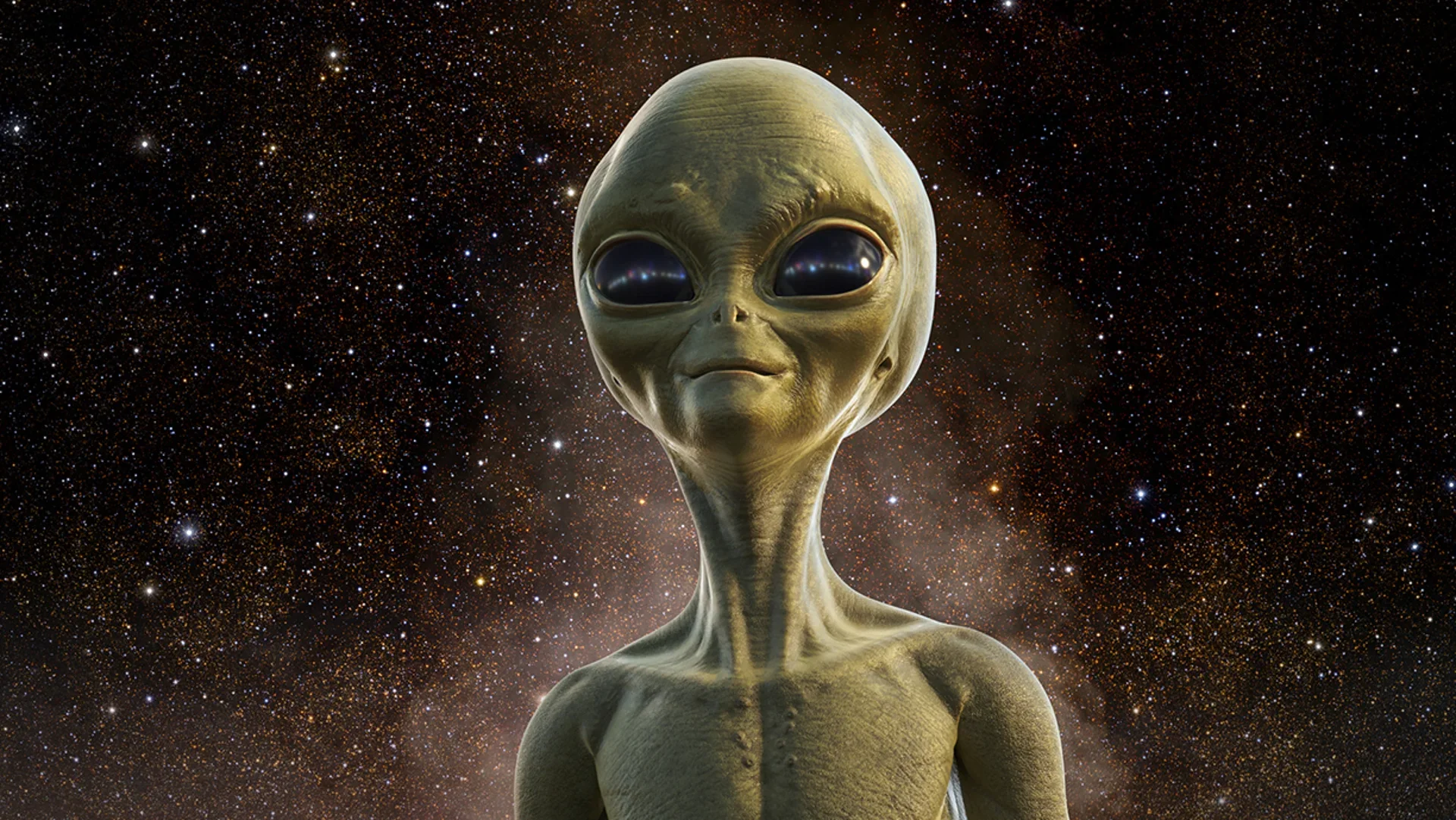
I’d like to revisit the idea of whether or not intelligent life exists elsewhere in the universe—or, more importantly, whether or not it’s been here. I’d bet these two burning questions have been in the human imagination since we first developed rational thought.
Let’s start with our universe. Current astronomical estimates suggest that our galaxy alone may contain up to 200 billion planets. Of those, roughly 60 billion are thought to be in what scientists call the habitable zone—The regions where liquid water could potentially exist on the surface. And even that definition is conservative, because it assumes life must resemble us chemically. Scientists openly acknowledge that there may be forms of life we haven’t yet discovered or don’t yet understand.
Obviously, this is speculative. But just for the sake of argument—and really as a thought experiment, just for fun, not as any statistical claim—let’s be extremely conservative. Let’s say the odds of intelligent, technological life developing on one of these habitable-zone planets is only one in a million. That would still give us roughly 60,000 potentially intelligent civilizations in our galaxy alone.
Based on deep-space observations from the Hubble Space Telescope, NASA has estimated that the observable universe contains on the order of two trillion galaxies. If we apply the same conservative—albeit very rough—math across that scale, we arrive at approximately 120 quadrillion planets that could potentially host intelligent life similar to ours. That’s 120 followed by 15 zeros.
Our brains are not wired to intuitively grasp exponential scales like this. And again, this estimate excludes entirely different forms of life that may not be carbon-based, may not use biology the way we do, or may not even occupy reality in the way we currently define it. Quantum mechanics has speculative theories about other dimensions existing in the many worlds theory, but let’s set that aside for now.
Then there’s the notion of time. Again, we have to think at cosmic scales. These are order-of-magnitude estimates, not exact counts. The math doesn’t prove anything—but it makes the question harder to ignore.
The Earth is approximately 4.5 billion years old.
Anatomically modern humans have existed for roughly 300,000 years.
Whereas Human civilization—with writing, cities, and organized societies—has only been around for about 6,000 years.
That means humans have existed for only 0.006% of Earth’s history.
Civilized humans for only about 0.0001% of earths existence.
And technologically advanced humans—if we generously define that as beginning when we had widespread electricity—Well that’s only been for about 125 years. So hardly a blip in earths lifespan.
On the other hand ...The universe itself is about 13.8 billion years old. & Many planets formed billions of years before Earth did—some by as much as nine billion years. That would give any other developing civilization a massive jump on technological development.
When you consider how exponential technological growth becomes once it gets going, you can easily see how far ahead the potential becomes. Just 200 years ago we had no electricity, no computers, no phones, no cars, no planes—nothing.
Considering what has developed in just the last 200 years, you can imagine where we might be in another 200 or 1,000 years—if we make it that far. It will surely be unrecognizable from today.
It’s easy to imagine how a civilization with just a 1,000-year technological head start could be way ahead of us in terms of capabilities. What seemed impossible to us 200 years ago is commonplace today. Showing an iPhone to someone 200 years ago would be beyond their comprehension.
It’s easy to imagine that a civilization just 1,000 years ahead of us could possess technologies that would appear impossible—or even magical—to us today. They wouldn’t need a nine-billion-year head start. Just a slight head start could make a massive order-of-magnitude difference. And they potentially do have a huge head start, since many planets formed billions of years before the Earth did. This matters because we often assume technological parity. But history shows that even small timing advantages can create massive capability gaps.
So at this stage, the math strongly suggests that life—and possibly intelligent life—exists elsewhere.
Which leads us to the next question: Has any of this intelligence ever visited Earth?
The odds here are longer—but certainly not zero. Given enough time and sufficient technology, interstellar—or even interdimensional—travel may be possible. And importantly, we should not assume such visitation would necessarily be biological. AI-controlled probes, a post-biological intelligence, or forms of intelligence we don’t yet understand may be far more likely.
As we enter the digital age and begin developing artificial intelligence, it’s reasonable to assume that other advanced civilizations might follow similar trajectories. It also seems far more logical to send AI into space rather than humans. AI doesn’t need food, rest, or oxygen. It doesn’t get sick, it doesn’t age, and doesn’t die. It can learn, adapt, and transmit data continuously.
We are already seeing:
The emergence of Artificial General Intelligence—systems with broader cognitive abilities comparable to human intelligence.
AND We are seeing Early discussions of Artificial Superintelligence, which would surpass even the best human minds across many fields.
At this point, it’s also worth acknowledging a limitation: science is optimized to study repeatable, controllable phenomena. If something is rare, intelligent, evasive, or consciousness-mediated, it may not present itself in ways that fit clean laboratory standards. That doesn’t make it not real—it just makes it very difficult to study.
Finally, there’s the question of appearance: Would ET look like us? It’s interesting that the most well-known image of an “alien” is the Grey, which looks eerily similar to humans.
Is that definitively what they would look like?
Given the diversity of life on Earth—with over 2 million species identified and perhaps another 8 million more suspected—none of which look like us at all, it feels unlikely that extraterrestrial life would closely resemble humans. Not to mention we appear to be the only lifeform here to develop advanced technological intelligence.
It’s interesting how the Greys, Nordics, and other Alien lifeforms that contactees report are most often so similar to us. Which I suppose is possible, since they share similar chemistry in the same universe. Or another reason may be looking at this through the ancient-aliens lens, if they somehow seeded us, or played a role in our DNA’s development. Or perhaps the idea of panspermia could explain this as well.
Otherwise that similarity feels unlikely, given the diversity just here on Earth. Even their size is often reported as roughly human-scale. Again, that doesn’t even happen consistently on Earth. This is why we should be cautious about projecting our own expectations onto non-human intelligences.
I’dl like to look at UFO or UAP sightings. This is a bit tougher, because we don’t necessarily have hard numbers to go off of. Instead, we rely on multiple civilian and governmental reporting systems. Organizations such as the Mutual UFO Network, the National UFO Reporting Center, and the Center for UFO Studies have all cataloged reports for decades. More recently, government entities such as AARO and NASA have begun accepting reports from military pilots and aviation professionals.
Cheryl and Linda Costa’s incredible book, UFO Sightings Desk Reference: United States of America 2001–2020, documents over 167,000 reported sightings in just a 20-year period. That averages roughly 8,000 reports per year in the U.S.. If we include all other reporting systems, a conservative estimate would be around 15,000 reported sightings annually.
But reporting rates themselves are extremely low. Researchers consistently estimate that only about 5–15% of sightings are ever reported. This is something that comes up repeatedly at UFO conferences. When you ask a large audience how many people have seen something anomalous, often half the room raises their hand. When you ask how many reported it, only a small fraction do.
Pilots and law enforcement officers are even less likely to report sightings due to stigma, career risk, and lack of incentive. Aviation safety expert Dr. Todd Curtis has documented this extensively. Many pilots have said there is simply no upside to reporting.
Therefore If we assume that 15,000 reported sightings represent roughly 10% of actual sightings, that suggests around 150,000 sightings per year in the United States alone. The U.S. is only about 4.5% of the world’s population, so multiplying 150,000 by roughly 22 would suggest about 3.3 million sightings annually worldwide.
But let’s keep this simple, and super -Super conservative, and instead of the actual number 22...Let’s just use just four times the U.S. number: So that would be--about 600,000 worldwide sightings per year. If we just that as our JUST FOR FUN GUESTIMATE NUMBER. Then...Taken over an 80-year period—1945 to 2025—that would amount to roughly 48 million total anomalous sightings worldwide across that period, using this conservative framework.
To be clear, this does not mean 48 million “alien craft.” It means 48 million anomalies were witnessed, somewhere by somebody. The Vast majority of which are certainly mundane. But once you have a dataset this large, the question flips.... The issue is no longer whether most cases are mundane—it’s whether all of them are.
Back to the one-in-a-million chance thought experiment: even then, you’d still get about 48 potentially legitimate cases—if even this tiny fraction of that enormous dataset represents something real and extraordinary, then we have something. And this isn’t even including USOs—underwater craft sightings—which are quite numerous as well.
Today we also get many reports from trained observers, including military pilots, along with multiple sensor systems: radar, infrared, and visual confirmation.
Given the extremely large number of sightings—especially from highly credible military pilots and officials—it becomes more plausible that at least a percentage of these cases could be of non-human origin, as the witnesses claim.
Beyond just sightings, we have another area worth exploring. That of alleged UFO crash-retrieval cases. The Roswell case alone has an enormous amount of evidence and first-person accounts that fit together into a consistent narrative. That includes a dozen deathbed or posthumous confessions from military-associated witnesses. I find these particularly compelling. Why would a military official leave a statement, to be opened only after their death, saying they saw a craft and bodies, and explaining they did it because they “wanted their grandchildren to know we aren’t alone”?
Why would someone do that?
There are also accounts from researcher Don Schmitt of interviewing Roswell eyewitnesses who physically broke down crying, saying, “I haven’t spoken about this to anyone in over 50 years.” That’s compelling as well. And I don’t think all these witness should just be disregarded out of hand.
Another famous case is the Rendlesham Forest incident, involving U.S. military intelligence personnel, contemporaneous notes, real-time audio recordings, and an official military memo written and submitted at the time of the event. Again—all very compelling.
There are many cases like this, involving extensive documentation and multiple eyewitnesses.
There is also research by Ryan S. Wood. In his book Majic Eyes Only: Earth’s Encounters with Extraterrestrial Technology, he catalogued over 100 alleged crash-retrieval cases.
Then we have organizations like Skywatcher, co-founded by Jake Barber and James Fowler, which have developed a system for detecting and tracking UAPs. They even claim they have been “summoning” vehicles via a signaling system, and believe these operations could expand our knowledge.
We also have first-person accounts of both UFO sightings and alleged direct contact experiences. These are certainly not proof, but I find it worth noting the volume of these accounts, and many feel very credible. It seems hard to believe these are all hoaxers—or liars, trying to make money. Very few people make any money off these accounts. In fact, many have had there lives flipped upside down after such experiences.
Of course, all of this takes place in our tiny sliver of time on Earth, and within the period when we’re technologically advanced enough to even look outward. It’s entirely possible—perhaps even more likely—that another civilization swung by Earth 300,000 years ago, or earlier...., before Homo sapiens even began to evolve.
Meanwhile, public openness to these possibilities is certainly growing.
A recent NewsNation poll found that over 63% of respondents believe the U.S. government has more information about extraterrestrial life than it has shared publicly.
A 2021 Pew Research Center survey found that about 65% of Americans believe intelligent life exists on other planets.—This actually feels low as the Scientific community numbers are much higher.
A Gallup poll from 2021 reported that 41% of U.S. adults believe some UFOs involve alien spacecraft.
A YouGov poll from 2025 found that 21% of Americans believe they have personally seen something they thought was a UFO. That is a Really high number. And again, 99.9 of them surely did NOT see a craft controlled by a Non Human Intelligence... unless it was one of our Artificial Intelligence systems.
And finally a YouGov poll in 2025 showed that 47% of Americans believe aliens have visited Earth.
When you talk about this out in the world it often doesn’t feel like ½ the country believes Aliens have visited earth, but that’s what that poll says.
Another area that ties in involves people who claim to have had direct contact with various types of aliens. There are credible cases from credible people that make a compelling argument that, something anomalous—something we don’t yet understand—is happening.
Much like UFO sightings, the vast majority of people who claim to have had experiences with non-human entities never report them.
These people often have their lives affected in very negative ways. It is extremely difficult to handle such a profound paradigm shift—and beyond that, there is the stigma, and the frustration of not being believed. This can lead to job loss, divorce, depression, and other serious consequences.
Yet the sheer number of people making these claims becomes compelling in its own right.
Still, it is very difficult to get a precise handle on how many people have reported such experiences.
One place to look for insight is among hypnotherapists who work regularly with claimed abductees.
David M. Jacobs is one of the best-known researchers in this area, and he has repeatedly speculated that approximately 2% of the U.S. population may have had a contact experience. He arrives at this estimate by extrapolating from a 1991 Roper Poll, which found that roughly 2–4% of U.S. adults reported experiences consistent with abduction-related criteria, such as missing time, paralysis, or unusual bodily marks. He also noted that many abductees are not even aware that they were abducted. It is common for individuals to have no conscious memory of the event. Sometimes a trigger later in life will remind them or nudges them toward hypnotic regression, where details of the encounter are recalled.
Now, if we take Dr. Jacobs’ 2% figure and apply it to the world population, you get a number on the order of 160 million people. But to be clear: that global extrapolation is illustrative, not empirical. Jacobs’ estimate is U.S.-based, and there’s no scientifically valid way to assume the same rate applies worldwide, or way to know if it’s even accurate to begin with. This is just a place for us to jump off.
Still—if we use that as a thought experiment and go back to the one-in-a-million framing, that would suggest 160 REAL contactee experiences.
We also have the work of Dr. John Mack, the Pulitzer Prize–winning psychiatrist and longtime Harvard Medical School professor, who publicly leaned into the idea that the contact experience is not rare. NOVA’s coverage of his work explicitly pointed viewers to polling data implying that millions of people may be connected to abduction claims.
Although it is difficult for many of us to take every alleged extraterrestrial encounter at face value, I have yet to hear a compelling alternative explanation for why so many people claim to have such experiences.
Back in the late ’80s, Dr. John Mack actually set out to answer that very question. He began his research with an explicitly skeptical mindset, assuming he would uncover some form of psychopathology.
He initially expected to find that alleged abductees would exhibit one or more of the following:
Psychosis or latent schizophrenia
Dissociative identity disorder
Fantasy-prone or highly suggestible personalities
Trauma-induced false memories
Cultural contagion driven by science fiction narratives
What he actually found, after conducting in-depth interviews with over 200 experiencers—often repeatedly, and over many years—was quite different: HE FOUND:
No evidence of mental illness
Claimants were psychologically stable
Functioning normally in careers, families, and society
Free of psychosis, delusional disorder, or schizophrenia
In standard clinical evaluations, they tested indistinguishably from control populations.
Mack repeatedly stated, “These are not people who are psychotic or delusional.”
He also noted that the experiences were internally consistent and cross-cultural. Without prior exposure to UFO literature, subjects reported:
Highly similar beings
Comparable procedures
Recurrent themes such as medical examinations, paralysis, and missing time
Similar emotional reactions, including terror, awe, and ontological shock
These patterns appeared consistently across:
Age
Education level
Religion
Nationality
This is very similar to what Dr. David Jacobs had found as well.
Although Mack never claimed these experiences proved extraterrestrial visitation in a literal, nuts-and-bolts sense, he did conclude that:
The trauma responses matched genuine lived experience, not fantasy
The experiences were real to the experiencers
They represented encounters with an external intelligence or agency
The phenomenon appeared to operate in a non-ordinary reality overlapping mind, matter, and consciousness
Western materialist frameworks were insufficient to fully explain it
So if these people are not “all crazy,” then perhaps something anomalous really is happening.
Interestingly, most witnesses and experiencers readily admit that they don’t know what it is. They don’t claim to fully understand what they saw or experienced—but that does not mean it wasn’t real or anomalous.
At the very least, there appears to be enough anomalous activity here to warrant serious scientific investigation, along with an open mind from all of us. Clearly, something is occurring that remains beyond our current understanding. We may be on the cusp of yet another major paradigm shift.
This phenomenon may involve:
Aliens traveling here from another planet
Aliens originating from another dimension
Spiritual or non-physical beings from another realm
Cryptoterrestrials that evolved alongside us on Earth but remain hidden
Future humans returning to our time
Post-biological civilizations
Coexistence within a simulated universe
AI machines or von Neumann probes exploring the cosmos
It could even be consciousness-based projections or interfaces
Throughout History our understanding of things in our natural world Often get flipped upside down As we gain more knowledge and understanding of how things work, most often given time and technology.
So Let’s look at some of the arguments for extraterrestrial life having visited Earth.
Evidence vs. indicators Here’s a helpful distinction: evidence is something that can be independently examined, tested, and verified. Indicators are patterns, testimonies, correlations, or repeated reports that suggest something may be happening, even if they don’t yet rise to the level of proof. Obviously A lot of what we’re talking about in this space falls into the category of indicators.
The Arguments for visitation Include:
Mathematical probability
We’ve already examined the mathematical potential within the known universe, which strongly suggests the certainty of extraterrestrial life existing somewhere—and at least the possibility that a civilization could have had the time to develop the technology necessary to visit Earth.Worldwide sightings and UAP evidence
We have countless reports worldwide of unexplained sightings in the sky. Beyond anecdotal reports, there are Unidentified Aerial Phenomena that have demonstrated advanced performance characteristics, AND there are witness accounts that are corroborated simultaneously by:
Radar
Infrared sensors
Visual observations
* Multiple Military pilot testimony
Many of these incidents have been publicly acknowledged by the U.S. Department of Defense.
These reports document craft exhibiting capabilities beyond known human technology, ( at least as faar as we know) such as:
Hypersonic speeds without sonic booms
Instantaneous acceleration
No visible propulsion or exhaust
Transmedium travel (through air, sea, and space with no change in veloocity)
3. There is also Whistleblower testimony
There has also been sworn testimony from intelligence and military insiders, supported by classified documentation presented to inspectors general. Numerous high-ranking government officials have come forward making bold claims that non-human technology exists—putting their reputations and careers at risk.
4. There are Direct contactee accounts as we looked at
The group of people who claim to be direct contactees, offering first-person accounts of encounters—again, often putting their reputations, and careers at risk as well.
5. Ancient and historical accounts
Another area of consideration is ancient and historical records, which appear to suggest advanced non-human encounters across many cultures. These include ancient texts, art, and oral traditions describing beings and craft that resemble modern UFO reports, such as:
Ezekiel’s “wheel within a wheel” vision in the Bible
Hindu vimanas
Mesoamerican sky gods
Australian Aboriginal “sky people”
6. Megalithic monuments
There are also massive stone structures built with precise astronomical alignments and advanced mathematical knowledge that seems far beyond what is traditionally attributed to the cultures of the time. Some Examples include:
The Great Pyramid, constructed from approximately 2.3 million stone blocks—some weighing 50–80 tons—with near-perfect cardinal alignment and mathematical relationships tied to Earth’s dimensions
Puma Punku, featuring H-blocks that appear to be clearly machine-cut
Sacsayhuamán, sack-say-wah-MAHN with its razor-tight stone joints and blocks weighing up to 200 tons
Baalbek, Lebanon, with stones exceeding 1,600 tons
Nan Madol, built over open water using tens of thousands of massive basalt columns transported from miles away
7. Lastly there are the Physical trace evidence and materials
The UFO community also points to cases involving physical trace evidence, including:
Ground depressions or scorched vegetation
Electromagnetic interference
Radiation anomalies
Recovered materials with unusual isotopic ratios, including alleged implants
Now let’s look at the counterarguments against extraterrestrial visitation
Here’s the strongest skeptical position, stated plainly: extraordinary claims require extraordinary evidence, and we do not yet have publicly available, independently testable proof that confirms non-human visitation. Most UFO reports, once investigated, resolve into mundane explanations—misidentifications, sensor artifacts, hoaxes, or classified human technology. And human perception is imperfect, especially under stress, at night, or in unusual viewing conditions. So the skeptic’s view is: the simplest explanation usually wins until the hard evidence forces a change.
Probability is not certainty
While the universe contains a vast number of potentially habitable planets, possibility does not equal certainty. Additionally, we have not yet solved interstellar travel.
Personally, I believe interstellar travel is ultimately just a matter of time and technology.Sightings are not proof
The argument here is that sightings alone do not confirm extraterrestrial origins. Which is easy to agree with: the vast majority of cases, once investigated, are surely explained as:
Misidentifications
Sensor errors or corrupted data
Hoaxes
Possibly advanced foreign or secret technology--Even though governments state these objects are not foreign adversaries, there is no way to know with absolute certainty what breakthroughs may exist.
To me, this is a fair argument. In today’s technological world, both governments and private aerospace companies alike could be developing highly classified technologies.
3. Whistleblower claims lack verification
While credible officials have made extraordinary claims, verifiable physical evidence has not yet been publicly produced.
I find it significant that individuals of high rank and prestige are willing to go on record and risk their careers stating that non-human craft or materials exist. I don’t think that should be casually dismissed.
4. Contactee experiences
Alternative explanations such as sleep paralysis, psychological phenomena, or false memories are often cited. And yes—claims alone do not establish reality or proof. No doubt.
Still, I personally find some of these accounts compelling—especially when taken in totality.
5. Ancient interpretations
The argument against these interpretations is that we are projecting modern interpretations onto ancient stories. These accounts could be symbolic, allegorical, or mythological, and none definitively prove extraterrestrial visitation.
I agree this is a limitation. However, it remains intriguing how many ancient stories, monuments, as we as modern encounter reports echo similar themes.
6. Megalithic construction explanations
Skeptics argue that these structures do not require outside knowledge and could have been built with enough manpower and time—and perhaps their construction methods have been lost to time.
That may be true, but for me, moving a 1,600-ton stone block at Baalbek still raises a reasonable question: to what end? The same result could have been achieved with smaller, more manageable stones.
Then we have The Fermi Paradox
Enrico Fermi famously asked: “If the universe is so full of potential life… where is everybody?”
Several explanations are commonly discussed:
Time overlap
Civilizations may not exist simultaneously. Even a 10,000-year technological phase is minuscule on cosmic timescales.Distance
Galactic distances are vast. Signals decay, travel takes time, and geometry alone could isolate civilizations.Detectability
We’ve only been transmitting detectable signals for about 100 years. Advanced civilizations may use communication methods we cannot yet detect—or may be deliberately avoiding detection. Technology on Earth struggles to remain compatible year to year; it’s reasonable to assume interstellar communication may face similar challenges.
So here is my take.
It is true that All evidence supporting non-human intelligence visiting Earth is refutable, and none has reached the level of undeniable proof. Belief levels exists on a spectrum.
I believe we should maintain an open mind and continue observing as technology and evidence evolve. And continue to put resource in to scientific exploration of these topics.
Unlike religion, which often requires belief in the supernatural, this hypothesis only requires belief in technology and time—both of which have repeatedly overcome once-impossible barriers for us.
Also, it’s worth acknowledging something else: governments have a long history of misdirection, secrecy, and information control—especially during the Cold War. Whether the reason was national security, strategic advantage, or public stability, it shows that official silence is not always the same thing as “nothing is happening.”
And one more note: consciousness research is still in its early days. We don’t have a complete scientific model for consciousness, perception, or altered states—yet those domains keep showing up around the edges of this phenomenon. That doesn’t prove anything either, but it’s a reminder that our map of reality is still incomplete, and will certainly change going forward as it always does.
For me, it’s not a single piece of evidence, but the totality:
The sheer number of potentially life-bearing planets
The volume of sightings
Credible officials risking their careers
The conviction of experiencers
Historical accounts
Massive megalithic structures exceeding 1,600 tons
Taken altogether—even at a one-in-a-million chance—it still feels compelling. Add after all that.... we only need ONE encounter to be real for the phenomenon itself to be real...whatever it may be.
So, at this point I would say yes—Virginia, I believe there are aliens out there, and some form of them has likely been here.
###
ABOUT THE WRITER:

“Captain” Ron Janix is Executive Producer & Co-Owner of Contact In The Desert, Host of the “Beyond Contact” radio show, and a Founding Member of The Hollywood Disclosure Alliance. For information about the 2026 Contact in the Desert conference, please visit: https://contactinthedesert.com/
